31st December can mean so many different types of things to anyone - clubbing off sentosa, enjoying fireworks at marina bay, or joining one of the drinking pugs in Clarke Quay.
Maybe for most of us here in SBM Youth, the day would be at SC, in PKS.
As you guys would be able to step over to the new year peacefully, lets all pray that:
- The Middle Eastern Turmoil between the Hamas Rebels and the Isreali Army stops and once again ensure the citizens' safety
- The sucessful campaign of President Barack Obama would really bring us some audacity of hope in economic negativity
- The continued good sustained management of Singapore economy by the government
and most importantly, the hard work we are about to put in next year with the:
- Safe elections and rightful decision making of the leaders in SBM Youth.
- The much improved culture in the group and the many things that all of u guys are gonna do to make the place a better area to be in.
- The energy keeps going on.
Many aspirations to be made, in the religious perspective.
For yourselves, try to link out many things in your life that you would have loved to reflect but find no time to do so. Then take some time to create goals that remain positive and achievable.
To all here, Happy New Year! and lets move on with life!
Alvin.
Wednesday, December 31, 2008

The Heart Sutra and other Buddhist cantopop songs
K-歌之王 Eason Chen is famous for his hit ballads. But what about Buddhist songs? You must have missed a Cantopop rendition of the Mahayana Buddhist scripture, The Heart Sutra.
Faye Wong did a similar song but we're not moving into there. Instead, we go on to one of the legendary 4 Heavenly Kings of Cantopop, Jacky Cheung. 微尘. A rather upbeat MTV for an upbeat song, but with quite cheem and philosophical lyrics.
And here's wishing everyone a Happy and Blessed 2009! May you and all your loved ones be well and happy!
Faye Wong did a similar song but we're not moving into there. Instead, we go on to one of the legendary 4 Heavenly Kings of Cantopop, Jacky Cheung. 微尘. A rather upbeat MTV for an upbeat song, but with quite cheem and philosophical lyrics.
And here's wishing everyone a Happy and Blessed 2009! May you and all your loved ones be well and happy!
Hello all! since I've been given the ability to blog here.. so why not? haha
Today im gonna share with u all a story about happiness :D
The story is called.
The Wise Old Man
A man of 92 years old , short, very well presented, who takes great care in his appearance, is moving into and old folks home today.
His wife has recently died, and he is obliged to leave his home.
After waiting several hours in the retirement home lobby, he gently smiles as he is told his room is ready.
As he slowly walks into the elevator, using his cane, I describe his room to him, including the sheet hung at the window which serves as a curtain.
"I like it very much!" The old man says, with the enthusiasm of an 8 year old boy just given a new puppy.
"Sir, you haven't seen the room yet, hang on a moment, we are almost there."
"That has nothing to do with it." he replies.
"Happiness is something i choose in advance. Whether I like the room does not depend on the furniture, or the decor, rather it depends on how i decide to see it. "
"It is already decided in my mind that I like my room. It is a decision i take every morning when I wake up."
"I can choose. I can spend my day in bed enumerating all the difficulties that i have with the parts of my body that no longer work well, or i can get up and give thanks to heaven for those parts that are still working in order. "
"Everyday is a gift, and as long as i can open my eyes, I will focus on the new day, and all the happy memories that i have built up during my life."
"Old age is like a bank account. You withdraw later in life what you have deposited along the way."
"So, my advice to you is to deposit all the happiness you can in your bank account of memories."
"Thank you for your part in filling my account with happy memories, which i am still continuing to fill."
Remember these simple guidelines for happiness.
1.Free your heart from hate.
2.Free your mind from worry.
3.Live simply.
4.Give more
5.Expect less.
It is the way we touch each other with simple truths that spread goodness in the world. Who knows? A miracle might happen as a result.!
Kaiwen :D
Tuesday, December 30, 2008
Singapore Buddhist Mission's Anniversary
I thought the anniversary was extremely heartwarming:
To see the members of the parent organisation join in the games with the youths and spar at chapteh. Apparently, the forte still belongs to the older generation. As much as we are active and healthy, they are still much more experienced than us because they have done it more than us. 姜还是老的辣!This was a reminder for me- they are indeed much more experienced than us, in running the organisation as well as doing Dhamma propagation work. Are we ready to learn from their enriching experiences and in turn enhance ours? =D
Seeing the youths dance cha-cha with the adults and to see the Aunties teach people like Junhao and Zhenyu ballroom dancing was not only truly amusing but comforting as well. It occurred to me not only as providing guidance in dancing, but in any aspect in fact. The adults are really there, all ready to provide us with guidance and assurance whenever we need it. Throughout the years, they have indeed been providing us with the support; for us to explore different areas in youth development, so long as it possesses potential that will help in our youths' growing years.
The vegetarian food that they cook for us is undefeatable! Really, it's the best vegetarian food anywhere. =D
Think about it:
Have we been appreciative and grateful towards them?
Have we been aware of all the effort that they have been putting in to groom us, so that we can bring joy to ourselves and others through the goodness of Buddhism?
Have we taken their presence for advantage?
Have we been ready to humble ourselves and ask for their support and guidance, when they are all willing to reach out their hands and give us a pull?
While they have been giving us so much support, have we been playing a mutual role and giving them our support?
Indeed, they are our parent organisation.
Marble =)
To see the members of the parent organisation join in the games with the youths and spar at chapteh. Apparently, the forte still belongs to the older generation. As much as we are active and healthy, they are still much more experienced than us because they have done it more than us. 姜还是老的辣!This was a reminder for me- they are indeed much more experienced than us, in running the organisation as well as doing Dhamma propagation work. Are we ready to learn from their enriching experiences and in turn enhance ours? =D
Seeing the youths dance cha-cha with the adults and to see the Aunties teach people like Junhao and Zhenyu ballroom dancing was not only truly amusing but comforting as well. It occurred to me not only as providing guidance in dancing, but in any aspect in fact. The adults are really there, all ready to provide us with guidance and assurance whenever we need it. Throughout the years, they have indeed been providing us with the support; for us to explore different areas in youth development, so long as it possesses potential that will help in our youths' growing years.
The vegetarian food that they cook for us is undefeatable! Really, it's the best vegetarian food anywhere. =D
Think about it:
Have we been appreciative and grateful towards them?
Have we been aware of all the effort that they have been putting in to groom us, so that we can bring joy to ourselves and others through the goodness of Buddhism?
Have we taken their presence for advantage?
Have we been ready to humble ourselves and ask for their support and guidance, when they are all willing to reach out their hands and give us a pull?
While they have been giving us so much support, have we been playing a mutual role and giving them our support?
Indeed, they are our parent organisation.
Marble =)
Spiritual Countdown 2008
Come for Spiritual Countdown 2008, organised by Youth Ministry and Singapore Buddhist Mission (Youth) !
Watch our SBMy's very own Buddhist rock band, probably the first and only Buddhist rock band! Also watch out for 10 motivators from SBMy and cheer and dance with them!
Time: 6:30pm
Meeting Place: Bishan MRT
Dress Code: Yellow SBM Camp shirt. For those who do not have, any SBM shirt will do fine.
The event will be held at Kong Meng San Monastery, the largest Buddhist temple and place of worship in Singapore.

See you guys there!
Watch our SBMy's very own Buddhist rock band, probably the first and only Buddhist rock band! Also watch out for 10 motivators from SBMy and cheer and dance with them!
Time: 6:30pm
Meeting Place: Bishan MRT
Dress Code: Yellow SBM Camp shirt. For those who do not have, any SBM shirt will do fine.
The event will be held at Kong Meng San Monastery, the largest Buddhist temple and place of worship in Singapore.

See you guys there!
Monday, December 29, 2008
Buddha Rocks My Socks
Buddhist youth groups in Malaysia have been doing very well for the past decade, especially in Buddhist music, as inspired by Datuk Victor Wee. Here in Singapore, we are still learning how to improve our Buddhist youth groups and hopefully, our very own youth band's brand of rock music and Buddhism will be a hit.
In anycase, here's a nice song sang by a youth group from Malaysia.
Vicky and co, bring down the Hall of No Form on New Year's Eve! Buddha rocks my socks!
Come to think about it... Buddha Rocks My Socks is not a bad band name. Better than A Bunch of Crazy People. I'll go for BRMS anytime.
In anycase, here's a nice song sang by a youth group from Malaysia.
Vicky and co, bring down the Hall of No Form on New Year's Eve! Buddha rocks my socks!
Come to think about it... Buddha Rocks My Socks is not a bad band name. Better than A Bunch of Crazy People. I'll go for BRMS anytime.


Thursday, December 25, 2008
A night at Kallang Stadium

When I was in Primary 3 (1994), Singapore won the Malaysia League and Cup Double for the last time, when it was eventually 'invited' to leave the tournament and so kick-start our very own S-League. But that every move meant that the Kallang Stadium will no longer be a regular feature when in the past, we watch Singapore played against Malaysian state teams every week.
And thus, without the Malaysia Cup and the League, Singaporeans grew to become fond of the English Premier League, and Cristiano Ronaldo takes over Fandi Ahmad. The Reds of Manchester United, Arsenal and Liverpool replaces the Red of Singapore.
So when Singapore host Vietnam on the second-leg of the semi-final of the ASEAN football championships, I eagerly invited the youths to join me at the grand ol' Kallang Stadium, and see what it was like, being a football-crazy kid back in the good 90s.

The match was supposed to start at 7:55pm, but I told the guys to meet at 5:30pm. They said I'm kiasu. But I'm not. Being a Kallang Stadium 'veteren', I know we were realy late. Because i had wanted the 13 of us to sit with the die-hard Singapore fans, as the atmosphere is the best in that area. But by 6pm, we were too far away from them.

If you look closely, you will find some of them decked out with bandanas supporting the Singapore national team. =)
 But it soon turned out fine, as a group of sporty Malay fans sat with us and their cheers and merry-making was highly infectious that heped added into the mood. it did felt like the Malaysia Cup days.
 After 2 hours of waiting, we soon sang our national anthem, 'Majulah Singapura'. It always felt good to be singing it, with 50,000 of my countrymen, together, as we support our national team to sporting glory.
The match went ahead and Singapore was playing realy well. All the boys and even the girls enjoyed every moment of it too! Though this was the first time they were watching a football match from a stadium, they were constantly on the edge of their seats. It really showed ow football is truly a world favourite game.

By halftime, our Lions clerly dominated, but Vietnamese defence denied them numerous times. Hangqi was so confident that by second half, our Lions will go for the kill, that he even suggested that we invite more people to come for the final, against Thailand, if we won the game Sadly however, our dear Lions lost the game by 1 fluke goal. Singapore Lions clearly dominated 70% of the game but sadly, you need to score to win. The better team was clearly the Lions and the group were clearly disappointed with the loss. One of them even suggested why there can't be points given to more posession and more passes. haha. Maybe, but having goals is what makes football so exciting.
So no more SBMy outing at Kallang Stadium next week. But then, should there be another game, lets go support our Lions again. This time, with a bigger group than 13, and with all of us decked out in red!
Majulah Singapura!
Shi Xiong
P.S. Thanks Sly for the photos
Wednesday, December 24, 2008
Annoncements!!!
27th December 2008 (Sat)
SBM 27th Anniversary
Time: 3pm @ SBM (for bus transport)
Location: Changi Cranwell Chalet 2
31st December 2008 (Wed)
Spiritual Countdown @ Bright Hill Temple
Time: 9pm

!!!Attention!!!
Due to tight schedule, Camp Ehi-passiko Cert and Video Presentation has been postpone to beginning of next year.
It is NO longer on 27th Dec
Sorry for any inconvenience caused.
Monday, December 22, 2008
Reflections
** the following passage is extracted from Cherise blog **
I found it truely reflective and inspiring and hope to share with the rest for those who did not visit her blog. (Cherise hope you dun mind)
I think Buddhism will give me the answers to my misconceptions. Why do I call my beliefs misconceptions even though I believe in it? Because if I knew and understood Buddhism so well then I wouldn't have these thoughts. Thus misconceptions. Logic basically.
Why am I here? Firstly, I'm on earth. I'm a human, I need oxygen, food and water to survive. I am a dependant being. Why am I on earth? Because I am. So deal with it:) I will learn what it means to be human, and what I have to do while I'm here.
Who am I? I'm Human. I will learn.
I found it truely reflective and inspiring and hope to share with the rest for those who did not visit her blog. (Cherise hope you dun mind)
What is life? Why are we here? Why am I here? Who am I? Questions I believe humans, people, have struggled with since time began. My personal belief is that life is all about experiences. The good and the bad we are exposed to in our lives each time. Love, happiness, pain, sorrow, suffering, joy, pleasure etcetra. I believe that there is a need to have opposites, the good and the bad, they co-exist. One cannot do without the other. You cannot have day without night, otherwise, what would it be called? The good cannot exist if there is no bad because there would be nothing to compare it to. The nature of things, this is my belief. To completely eradicate one side... it's unthinkable to me how would the world function like that. Imagine a world where there were no 'bad' people. Have you read the book ? To me, it's scary. There would be no good either. Everybody would be the same. Monotonous. *Shudder*
I think Buddhism will give me the answers to my misconceptions. Why do I call my beliefs misconceptions even though I believe in it? Because if I knew and understood Buddhism so well then I wouldn't have these thoughts. Thus misconceptions. Logic basically.
Why am I here? Firstly, I'm on earth. I'm a human, I need oxygen, food and water to survive. I am a dependant being. Why am I on earth? Because I am. So deal with it:) I will learn what it means to be human, and what I have to do while I'm here.
Who am I? I'm Human. I will learn.
do a good deed NOW
The upcoming recession is a worrying topic in most households, especially those struggling with poverty and jobless. But I believe that most of us come from families that can still cope fine and thus, it will be good to practice and do a good need now.
A message from an old friend:
"Dear friends, I'm collecting some old, unwated clothes 'n especially jeans. I will turn them into some useful 'n sellable items. I have many jobless and no money people from welfare organisations to make the items so it can create jobs for them. Maybe while clearing your cupboard for the new year, you can give me your unwanted clothes n jean.s If you have clothes that you want to sell, I can also sell them for you on my upcoming blog. I will need ongoing supplies of these clothes. So, if possible help me spread the words. I am available to collect the clothes anything including xmas eve n xmas. Do let me know. Thanks! Practice green, save the earth from global warming pls."
Lawrence, 96694664.
A message from an old friend:
"Dear friends, I'm collecting some old, unwated clothes 'n especially jeans. I will turn them into some useful 'n sellable items. I have many jobless and no money people from welfare organisations to make the items so it can create jobs for them. Maybe while clearing your cupboard for the new year, you can give me your unwanted clothes n jean.s If you have clothes that you want to sell, I can also sell them for you on my upcoming blog. I will need ongoing supplies of these clothes. So, if possible help me spread the words. I am available to collect the clothes anything including xmas eve n xmas. Do let me know. Thanks! Practice green, save the earth from global warming pls."
Lawrence, 96694664.
Reflections
Reflections from Kevin's blog. (hope you don't mind me putting it up here!)

have u ever wondered, why are we here?
why are we born, into this world. to be called humans, to be what we are now, to continue with life with the norm that what other people had created.
if we dwell deep in the sutras and the nikayas of the Buddha well, we'll learn that it's all karmic effects and actions.
to some, to be born in the Human realm, may deem to be an average state. some, they want to be reborn in a better realm, the Heavenly realm.
but to Buddhist, as we all know, to be born in the Human realm, is actually the hardest of all. the rare-est of the rare-est chance that we have, as compared to other realms.
the Buddha last set foot as a Human, before he attained Nibbana. or to some, Nirvana.
to me, life is like a lucky draw to an adventure trip. it comes with a limit. when u checked in the hotel, u have to leave the hotel at one time eventually.
but before u leave the hotel, u must make sure u have made ur trip worth.
this is the same concept as life.
lets face the fact.
everything is impermanent. we have to die and pass on one day.
but it's the period of time that when we are alive which matters most. it's not the matter of stopping urself from dying. one has to grow old gracefully, as this is nature, and we shall not go against it.
it depends what we want our life to be made of.
have we really made our lifespan worth? or do we just waste our time away and die?
to some, they just wana earn alot of money. be rich. live rich. and die rich.
to some, they wana make history, and make themselves known.
to some, they just wana live a simple life, with as less worries as possible, and just take it easy along the growth curve.
to buddhists, did we really thought of what we want our life to become?
or are we just blindly practicing the teachings of the Buddha, like doing Dana, without knowing and understanding what's the motive behind it?
to me, i believe that we should spend our life cultivating ourselves. to dwell deep into our mind, to know ourselves better, and to know the world better. how everything works. and how everything falls into one big picture for what we call Life.
its amazing when we study and concentrate on a small simple thing, such as breathing, that we suddenly realise the nature of it, and how it connects to form the big picture.
cultivating ourself, keep improving ourself, and broaden our understanding about life through meditation might be some of the things that one may focus on in life.
at least to me that is.
now i just have to ensure that i dont just talk the talk, but to actually work the talk, and put it into action.
when u see more, u learn more, and u'll want to continue it.
but ultimately, to all, think of how u want ur life to be, and how do u want to make it worth. rather than to waste it on norms that other people have created, and regretting it in the future, without u knowing that u regretted it.
(norm - process of life which is often monotonous, eg: going to kindy, then to primary, secondary, college, uni, work, have a family, grow old, watch ur kids have their families, get sick, and die)
think about it.
=)

have u ever wondered, why are we here?
why are we born, into this world. to be called humans, to be what we are now, to continue with life with the norm that what other people had created.
if we dwell deep in the sutras and the nikayas of the Buddha well, we'll learn that it's all karmic effects and actions.
to some, to be born in the Human realm, may deem to be an average state. some, they want to be reborn in a better realm, the Heavenly realm.
but to Buddhist, as we all know, to be born in the Human realm, is actually the hardest of all. the rare-est of the rare-est chance that we have, as compared to other realms.
the Buddha last set foot as a Human, before he attained Nibbana. or to some, Nirvana.
to me, life is like a lucky draw to an adventure trip. it comes with a limit. when u checked in the hotel, u have to leave the hotel at one time eventually.
but before u leave the hotel, u must make sure u have made ur trip worth.
this is the same concept as life.
lets face the fact.
everything is impermanent. we have to die and pass on one day.
but it's the period of time that when we are alive which matters most. it's not the matter of stopping urself from dying. one has to grow old gracefully, as this is nature, and we shall not go against it.
it depends what we want our life to be made of.
have we really made our lifespan worth? or do we just waste our time away and die?
to some, they just wana earn alot of money. be rich. live rich. and die rich.
to some, they wana make history, and make themselves known.
to some, they just wana live a simple life, with as less worries as possible, and just take it easy along the growth curve.
to buddhists, did we really thought of what we want our life to become?
or are we just blindly practicing the teachings of the Buddha, like doing Dana, without knowing and understanding what's the motive behind it?
to me, i believe that we should spend our life cultivating ourselves. to dwell deep into our mind, to know ourselves better, and to know the world better. how everything works. and how everything falls into one big picture for what we call Life.
its amazing when we study and concentrate on a small simple thing, such as breathing, that we suddenly realise the nature of it, and how it connects to form the big picture.
cultivating ourself, keep improving ourself, and broaden our understanding about life through meditation might be some of the things that one may focus on in life.
at least to me that is.
now i just have to ensure that i dont just talk the talk, but to actually work the talk, and put it into action.
when u see more, u learn more, and u'll want to continue it.
but ultimately, to all, think of how u want ur life to be, and how do u want to make it worth. rather than to waste it on norms that other people have created, and regretting it in the future, without u knowing that u regretted it.
(norm - process of life which is often monotonous, eg: going to kindy, then to primary, secondary, college, uni, work, have a family, grow old, watch ur kids have their families, get sick, and die)
think about it.
=)
Richard Gere: My Journey as a Buddhist
Richard Gere: My Journey as a Buddhist
By Melvin McLeod
By Melvin McLeod
Richard Gere talks about his many years of Buddhist practice, his devotion to his teacher the Dalai Lama, and his work for Tibetan freedom.

I suppose it's a sign of our current cynicism that we find it hard to believe celebrities can also be serious people. The recent prominence of "celebrity Buddhists" has brought some snide comments in the press, and even among Buddhists, but personally I am very appreciative of the actors, directors, musicians and other public figures who have brought greater awareness to the cause of Tibetan freedom and the value of Buddhist practice. These are fine artists and thoughtful people, some Buddhists, some not, among them Martin Scorsese, Leonard Cohen, Adam Yauch, Michael Stipe, Patti Smith, and of course, Richard Gere. I met Gere at his office in New York recently, and we talked about his many years of Buddhist practice, his devotion to his teacher the Dalai Lama, and his work on behalf of the dharma and the cause of the Tibetan people.
—Melvin McLeod
Melvin McLeod: What was your first encounter with Buddhism?
Richard Gere: I have two flashes. One, when I actually encountered the written dharma, and two, when I met a teacher. But before that, I was engaged in philosophical pursuit in school. So I came to it through Western philosophers, basically Bishop Berkeley.
Melvin McLeod: "If a tree falls in the forest and no one hears it, did it really happen?"
Richard Gere: Yes. Subjective idealism was his thesis—reality is a function of mind. It was basically the "mind only" school that he was preaching. Quite radical, especially for a priest. I was quite taken with him. The existentialists were also interesting to me. I remember carrying around a copy of Being and Nothingness, without knowing quite why I was doing it. Later I realized that "nothingness" was not the appropriate word. "Emptiness" was really what they were searching for—not a nihilistic view but a positive one.
My first encounter with Buddhist dharma would be in my early twenties. I think like most young men I was not particularly happy. I don't know if I was suicidal, but I was pretty unhappy, and I had questions like, "Why anything?" Realizing I was probably pushing the edges of my own sanity, I was exploring late-night bookshops reading everything I could, in many different directions. Evans-Wentz's books on Tibetan Buddhism had an enormous impact on me. I just devoured them.
Melvin McLeod: So many of us were inspired by those books. What did you find in them that appealed to you?
Richard Gere: They had all the romance of a good novel, so you could really bury yourself in them, but at the same time, they offered the possibility that you could live here and be free at the same time. I hadn't even considered that as a possibility—I just wanted out—so the idea that you could be here and be out at the same time—emptiness—was revolutionary.
So the Buddhist path, particularly the Tibetan approach, was obviously drawing me, but the first tradition that I became involved in was Zen. My first teacher was Sasaki Roshi. I remember going out to L.A. for a three day sesshin [Zen meditation program]. I prepared myself by stretching my legs for months and months so I could get through it.
I had a kind of magical experience with Sasaki Roshi, a reality experience. I realized, this is work, this is work. It's not about flying through the air; it's not about any of the magic or the romance. It's serious work on your mind. That was an important part of the path for me.
Sasaki Roshi was incredibly tough and very kind at the same time. I was a total neophyte and didn't know anything. I was cocky and insecure and fucked up. But within that I was serious about wanting to learn. It got to the point at the end of the sesshin where I wouldn't even go to the dokusan [interview with the Zen master]. I felt I was so ill-equipped to deal with the koans that they had to drag me in. Finally, it got to where I would just sit there, and I remember him smiling at that point. "Now we can start working," he said. There was nothing to say—no bullshit, nothing.
Melvin McLeod: When someone has such a strong intuitive connection, Buddhism suggests that it's because of karma, some past connection with the teachings.
Richard Gere: Well, I've asked teachers about that—you know, what led me to this? They'd just laugh at me, like I thought there was some decision to it or it was just chance. Well, karma doesn't work that way. Obviously there's some very clear and definite connection with the Tibetans or this would not have happened. My life would not have expressed itself this way.
I think I've always felt that practice was my real life. I remember when I was just starting to practice meditation—24 years old, trying to come to grips with my life. I was holed up in my shitty little apartment for months at a time, just doing tai chi and doing my best to do sitting practice. I had a very clear feeling that I'd always been in meditation, that I'd never left meditation. That it was a much more substantial reality than what we normally take to be reality. That was very clear to me even then, but it's taken me this long in my life to bring it out into the world more, through more time practicing, watching my mind, trying to generate bodhicitta.
Melvin McLeod: When did you meet the Dalai Lama for the first time?
Richard Gere: I had been a Zen student for five or six years before I met His Holiness in India. We started out with a little small talk and then he said, "Oh, so you're an actor?" He thought about that a second, and then he said, "So when you do this acting and you're angry, are you really angry? When you're acting sad, are you really sad? When you cry, are you really crying?" I gave him some kind of actor answer, like it was more effective if you really believed in the emotion that you were portraying. He looked very deeply into my eyes and just started laughing. Hysterically. He was laughing at the idea that I would believe emotions are real, that I would work very hard to believe in anger and hatred and sadness and pain and suffering.
That first meeting took place in Dharmsala in a room where I see him quite often now. I can't say that the feeling has changed drastically. I am still incredibly nervous and project all kinds of things on him, which he's used to at this point. He cuts through all that stuff very quickly, because his vows are so powerful, so all-encompassing, that he is very effective and skillful at getting to the point. Because the only reason anyone would want to see him is that they want to remove suffering from their consciousness.
It completely changed my life the first time I was in the presence of His Holiness. No question about it. It wasn't like I felt, "Oh, I'm going to give away all my possessions and go to the monastery now," but it quite naturally felt that this was what I was supposed to do—work with these teachers, work within this lineage, learn whatever I could, bring myself to it. In spite of varying degrees of seriousness and commitment since then, I haven't really fallen out of that path.
Melvin McLeod: Does His Holiness work with you personally, cutting your neuroses in the many ways that Buddhist teachers do, or does he teach you more by the example of his being?
Richard Gere: There's no question that His Holiness is my root guru, and he's been quite tough with me at times. I've had to explain to people who sometimes have quite a romantic vision of His Holiness that at times he's been cross with me, but it was very skillful. At the moment he did it, I'm not saying it was pleasant for me, but there was no ego attachment from his side. I'm very thankful that he trusts me enough to be the mirror for me and not pull any punches. Mind you, the first meetings were not that way; I think he was aware how fragile I was and was being very careful. Now I think he senses that my seriousness about the teachings has increased and my own strength within the teachings has increased. He can be much tougher on me.
Melvin McLeod: The Gelugpa school of Tibetan Buddhism puts a strong emphasis on analysis. What drew you to the more intellectual approach?
Richard Gere: Yeah, it's funny. I think what I probably would have been drawn to instinctively was Dzogchen [the Great Perfection teachings of the Nyingma school]. I think the instinct that drew me to Zen is the same one that would have taken me to Dzogchen.
Melvin McLeod: Space.
Richard Gere: The non-conceptual. Just go right to the non-conceptual space. Recently I've had some Dzogchen teachers who've been kind enough to help me, and I see how Dzogchen empowers much of the other forms of meditation that I practice. Many times Dzogchen has really zapped me into a fresh vision and allowed me to see a kind of limited track that I was falling into through conditioning and basic laziness.
But overall, I think the wiser choice for me is to work with the Gelugpas, although space is space wherever it is. I think the analytical approach—kind of finding the non-boundaries of that space—is important. In a way, one gets stability from being able to order the rational mind. When space is not there for you, the intellectual work will still keep you buoyed up. I still find myself in situations where my emotions are out of control and the anger comes up, and it's very difficult to enter pure white space at that point. So the analytical approach to working with the mind is enormously helpful. It's something very clear to fall back on and very stabilizing.
Melvin McLeod: What was the progression of practices for you, to the extent that you can talk about it, after you entered the vajrayana path?
Richard Gere: I'm a little hesitant to talk about this because, one, I don't claim to know much, and two, being a celebrity these things get quoted out of context and sometimes it's not beneficial. I can say that whatever forms of meditation I've taken on, they still involve the basic forms of refuge, generation of bodhicitta [awakened mind and heart] and dedication of merit to others. Whatever level of the teachings that my teachers allow me to hear, they still involve these basic forms.
Overall, tantra has become less romantic to me. It seems more familiar. That's an interesting stage in the process, when that particular version of reality becomes more normal. I'm not saying it's normal, in the sense of ordinary or mundane, but I can sense it being as normal as what I took to be reality before. I can trust that.
Melvin McLeod: What dharma books have meant a lot to you?
Richard Gere: People are always asking me what Buddhist books I would recommend. I always suggest Zen Mind, Beginner's Mind to someone who says, "How can I start?" I'll always include something by His Holiness. His book Kindness, Clarity and Compassion is extraordinarily good. There's wonderful stuff in there. Jeffrey Hopkins' The Tantric Distinction is very helpful. There are so many.
Melvin McLeod: You go to India often. Does that give you the opportunity to practice in a less distracted environment?
Richard Gere: Actually it's probably more distracting! When I go there, I'm just a simple student like everyone else, but I'm also this guy who can help. When I'm in India there are a lot of people who require help and it's very difficult to say no. So it's not the quietest time in my life, but just being in an environment where everyone is focusing on the dharma and where His Holiness is the center of that focus is extraordinary.
Melvin McLeod: When you're in Dharmsala do you have the opportunity to study with the Dalai Lama or other teachers there?
Richard Gere: I'll try to catch up with all my teachers. Some of them are hermits up in the hills, but they come down when His Holiness gives teachings. It's a time to catch up on all of it, and just remember. For me, it means remembering. Life here is an incredible distraction and it's very easy to get off track. Going there is an opportunity to remember, literally, what the mission is, why we're here.
Melvin McLeod: Here you're involved in a world of film-making that people think of as extremely consuming, high-powered, even cut-throat.
Richard Gere: That's all true. But it's like everyone else's life, too. It just gets into the papers, that's all. It's the same emotions. The same suffering. The same issues. No difference.
Melvin McLeod: Do you find that you have a slightly split quality to your life, going back and forth between these worlds?
Richard Gere: I find that more and more my involvement in a career, in a normal householder life, is a great challenge for deepening the teachings inside of me. If I weren't out in the marketplace, there's no way I would be able to really face the nooks and crannies and darkness inside of me. I just wouldn't see it. I'm not that tough; I'm not that smart. I need life telling me who I am, showing me my mind constantly. I wouldn't see it in a cave. The problem with me is I would probably just find some blissful state, if I could, and stay there. That would be death. I don't want that. As I said, I'm not an extraordinary practitioner. I know pretty much who I am. It's good for me to be in the world.
Melvin McLeod: Are there any specific ways you try to bring dharma into your work, beyond working with your mind and trying to be a decent human being?
Richard Gere: Well, that's a lot! That's serious shit.
Melvin McLeod: That's true. But those are the challenges we all face. I was just wondering if you try to bring a Buddhist perspective to the specific world of film?
Richard Gere: In film, we're playing with something that literally fragments reality, and being aware of the fragmentation of time and space I think lends itself to the practice, to loosening the mind. There is nothing real about film. Nothing. Even the light particles that project the film can't be proven to exist. Nothing is there. We know that when we're making it; we're the magicians doing the trick. But even we get caught up in thinking that it is all real—that these emotions are real, that this object really exists, that the camera is picking up some reality.
On the other hand, there is some magical sense that the camera sees more than our eyes do. It sees into people in a way that we don't normally. So there's a vulnerability to being in front of the camera that one doesn't have to endure in normal life. There's a certain amount of pressure and stress in that. You are being seen, you are really being seen, and there is no place to hide.
Melvin McLeod: But there's no way you actually work with the product to...?
Richard Gere: You mean teaching through that? Well, I think these things are far too mysterious to ever do that consciously, no. Undoubtedly, as ill-equipped to be a good student as I am, I've had a lot of teachings, and some have stuck. Somehow they do communicate-not because of me, but despite me. So I think there is value there. It's the same as everyone: whatever positive energies have touched them in myriad lifetimes are going to come through somehow. When you look into their eyes, when the camera comes in for a closeup, there's something there that is mysterious. There's no way you can write it, there's no way you can plan it, but a camera will pick it up in a different way than someone does sitting across the table.
Melvin McLeod: How comfortable are you with your role as the spokesman for the dharma?
Richard Gere: For the dharma? I've never, ever accepted that, and I never will. I'm not a spokesman for dharma. I lack the necessary qualities.
Melvin McLeod: But you are always being asked in public about being a Buddhist.
Richard Gere: I can talk about that only as a practitioner, from the limited point of view that I have. Although it's been many years since I started, I can't say that I know any more now than I did then. I can't say I have control over my emotions; I don't know my mind. I'm lost like everyone else. So I'm certainly not a leader. In the actual course of things, I talk about these things, but only in the sense that this is what my teachers have given me. Nothing from me.
Melvin McLeod: When you are asked about Buddhism, are there certain themes you return to that you feel are helpful, such as compassion?
Richard Gere: Absolutely. I will probably discuss wisdom and compassion in some form, that there are two poles we are here to explore—expanding our minds and expanding our hearts. At some point hopefully being able to encompass the entire universe inside mind, and the same thing with heart, with compassion, hopefully both at the same time. Inseparable.
Melvin McLeod: When you say that, I'm reminded of something that struck me when I saw the Dalai Lama speak. He was teaching about compassion, as he so often does, but I couldn't help but wonder what would happen if he spoke more to a wider audience about the Buddhist understanding of wisdom, that is, emptiness. I just wondered what would happen if this revered spiritual leader said to the world, well, you know, all of this doesn't really exist in any substantive way.
Richard Gere: Well, the Buddha had many turnings of the wheel of dharma, and I think His Holiness functions in the same way. If we are so lost in our animal natures, the best way to start to get out of that is to learn to be kind. Someone asked His Holiness, how can you teach a child to care about and respect living things? He said, see if you can get them to love and respect an insect, something we instinctively are repulsed by. If they can see its basic sentience, its potential, the fullness of what it is, with basic kindness, then that's a huge step.
Melvin McLeod: I was just reading where the Dalai Lama said that he thinks mother's love is the best symbol for love and compassion, because it is totally disinterested.
Richard Gere: Nectar. Nectar is that! [In vajrayana practice, spiritual blessings are visualized as nectar descending on the meditator.] That's mother's milk; that's coming right from mom. Absolutely.
Melvin McLeod: Although you are cautious in speaking about the dharma, you are a passionate spokesman on the issue of freedom for Tibet.
Richard Gere: I've gone through a lot of different phases with that. The anger that I might have felt twenty years ago is quite different now. We're all in the same boat here, all of us—Hitler, the Chinese, you, me, what we did in Central America. No one is devoid of the ignorance that causes all these problems. If anything, the Chinese are just creating the cause of horrendous future lifetimes for themselves, and one cannot fail to be compassionate towards them for that.
When I talk to Tibetans who were in solitary confinement for twenty or twenty-five years, they say to me, totally from their heart, that the issue is larger than what they suffered at the hands of their torturer, and that they feel pity and compassion for this person who was acting out animal nature. To be in the presence of that kind of wisdom of heart and mind—you can never go back after that.
Melvin McLeod: It is remarkable that an entire people, generally, is imbued with a spirit like that.
Richard Gere: I'm convinced that it is because it was state-oriented. Obviously, problems come with that, with no separation of church and state. But I am convinced that the great dharma kings manifested to actually create a society based on these ideas. Their institutions were designed to create good-hearted people; everything in the society was there to feed it. That became decadent—there were bad periods, there were good periods, whatever. But the gist of the society was to create good-hearted people, bodhisattvas, to create a very strong environment where people could achieve enlightenment. Imagine that in America! I mean, we have no structure for enlightenment. We have a very strong Christian heritage and Jewish heritage, one of compassion, one of altruism. Good people. But we have very little that encourages enlightenment—total liberation.
Melvin McLeod: Looking at how human rights violations have come to the forefront of world consciousness, such as in Tibet and South Africa before that, the work of celebrities such as yourself who have been able to use their fame skillfully has been an important factor.
Richard Gere: I hope that's true. It's kind of you to say. It's an odd situation. Previously I'd worked on Central America and some other political and human rights issues, and got to know the ropes a bit in working with Congress and the State Department. But that didn't really apply to this situation. Tibet was too far away, and there had been extremely limited American involvement there.
I found also that the question of His Holiness in terms of a political movement was very tricky. It's a non-violent movement, which is a problem in itself—you don't get headlines with nonviolence. And His Holiness doesn't see himself as Gandhi; he doesn't create dramatic, operatic situations.
So we've ended up taking a much steadier kind of approach. It's not about drama. It's about, little by little, building truth, and I think it's probably been deeper because of that. The senators, congressmen, legislators and parliamentarians who have got involved go way beyond what they would normally give to a cause they believed in.
I think the universality of His Holiness' words and teachings have made this so much bigger than just Tibet. When His Holiness won the Nobel Peace Prize, there was a quantum leap. He is not seen as solely a Tibetan anymore; he belongs to the world. We were talking before about what the camera picks up—just a picture of His Holiness seems to communicate so much. Just to see his face. It's arresting, and at the same time it's opening. You can imagine what it would have been like to see the Buddha. Just to see his face would put you so many steps ahead. I think a lot of what we have done is just putting His Holiness in situations where he could touch as many people as possible, which he does every time with impeccable bodhicitta.
I keep saying Tibet will be taken care of in the process, but it's about saving every sentient being, and as long as we keep our eyes on that prize, Tibet will be all right. Of course there are immediate issues to deal with in Tibet. We work on those all the time. Although we had reason to believe a more open communication with the Chinese was evolving, the optimism generated by Clinton's visit to China has not panned out. In fact, the Tibetans, as well as the pro-democracy Chinese, are experiencing the most repressive period since the late eighties, since Tienanmen Square.
Melvin McLeod: I'm always impressed with a point the Dalai Lama makes which is very similar to what my own teacher, Chögyam Trungpa Rinpoche, presented in the Shambhala teachings. That is the need for a universal spirituality based on simple truths of human nature that transcends any particular religion, or the need for formalized religion at all. This strikes me as an extraordinarily important message.
Richard Gere: Well, I think it's true. His Holiness says that what we all have in common is an appreciation of kindness and compassion; all the religions have this. Love. We all lean towards love.
Melvin McLeod: But even beyond that, he points out that billions of people don't practice a religion at all.
Richard Gere: But they have the religion of kindness. They do. Everyone responds to kindness.
Melvin McLeod: It's fascinating that a major religious leader espouses in effect a religion of no religion.
Richard Gere: Sure, that's what makes him larger than Tibet.
Melvin McLeod: It makes him larger than Buddhism.
Richard Gere: Much larger. The Buddha was larger than Buddhism.
Melvin McLeod: You are able to sponsor a number of projects in support of the dharma and of Tibetan independence.
Richard Gere: I'm in kind of a unique position in that I do have some cash in my foundation, so I'm able to offer some front money to various groups to help them get projects started. Sponsoring dharma books is important to me—translation, publishing—but I think the most important thing I can do is help sponsor teachings. To work with His Holiness and help sponsor teachings in Mongolia, India, the United States and elsewhere-nothing gives me more joy.
The program we're doing this summer is four days of teachings by the Dalai Lama in New York. August 12 to 14 will be the formal teaching by His Holiness on Kamalashila's "Middle-length Stages of Meditation" and "The Thirty-seven Practices of the Bodhisattvas." That's at the Beacon Theater and there are about 3,000 tickets available. I'm sure those will sell quickly. If people can't get into that, there's going to be a free public teaching in Central Park on the fifteenth. We're guessing there will be space for twenty-five to forty thousand people, so whoever wants to come will be able to. His Holiness will give a teaching on the Eight Verses of Mind Training, a very powerful lojong teaching, one of my favorites actually. Then His Holiness will give a wang, a long life empowerment of White Tara.
I've seen His Holiness give bodhicitta teachings like these, and no one can walk away without crying. He touches so deep into the heart. He gave a teaching in Bodh Gaya last year on Khunu Lama's "In Praise of Bodhicitta," which is a long poems Just thinking about it now, I'm starting to crys So beautiful. When he was teaching on Kunu Lama's "In Praise of Bodhicitta," who was his own teachers whooosh! We were inside his heart, in the most extraordinary way. A place you can't be told about, you can't read about, nothing. You're in the presence of Buddha. I've had a lot of teachers who give wonderful teachings on wisdom, but to see someone who really, really has the big bodhicitta, real expanded bodhicittas.
So those are the teachings that I believe His Holiness is here to give. That's what touches.
Rain Cloud of the Dhamma
Rain Cloud Of The Dhamma
Imagine somewhere in the world, on the mountains, along a river bank, in a valley or on a plain, that there are growing plants, trees, bushes, groves and medical herbs of various types, with different names and a variety of colors. Then imagine that a great cloud spreading over the world pours down rain equally everywhere.
Its moisture would equally nourish those plants with their small, medium-sized and large roots, stalks, twigs and leaves. Fr om the rain of this one cloud all these different plants grow each according to their own nature. From the same soil moistened with the same rain, they put forth different flowers and diverse fruits.
The Tathagata is like this. He appears in the world like a great rain cloud and he extends his message over the world of gods, humans and asuras…and numberless beings come to hear the Buddha’s Dhamma. Then, observing the natures of these beings – smart and dull, active and passive – the he teaches them the Dhamma according to their capacity so that they rejoice and benefit.
From the Sadharmapundarika Sutra
Its moisture would equally nourish those plants with their small, medium-sized and large roots, stalks, twigs and leaves. Fr
 om the rain of this one cloud all these different plants grow each according to their own nature. From the same soil moistened with the same rain, they put forth different flowers and diverse fruits.
The Tathagata is like this. He appears in the world like a great rain cloud and he extends his message over the world of gods, humans and asuras…and numberless beings come to hear the Buddha’s Dhamma. Then, observing the natures of these beings – smart and dull, active and passive – the he teaches them the Dhamma according to their capacity so that they rejoice and benefit.
From the Sadharmapundarika Sutra
Saturday, December 20, 2008


Friday, December 19, 2008
Camp Ehi-Passiko 2008 (Day 4)
is a
SUCCESS!!!

Introducing the 4 Teams @ CEP 2008:
Jack Jack

Hiro

Ninja

2 Piece

Our Beloved Campers with Camp Master and Camp Mistress:
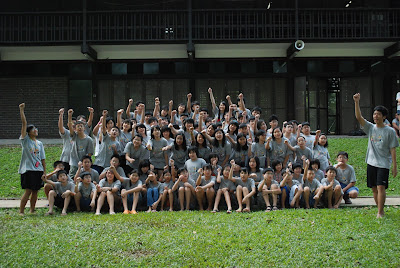 Thank you campers for coming! You guys are the most important people in this camp. We hope you have all enjoyed your 4 days stay with us and have made new friends and learn something new in the Dhamma.

Group Leaders
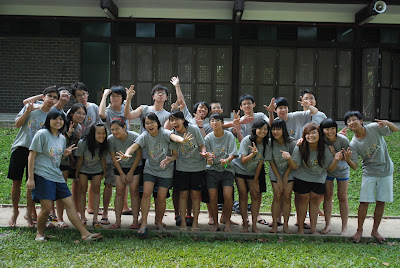
Games Team

Logistics (The Head, V-Head & their men).

Messing Girls

MANPOWER

Campfire ICs

Camera Girls

Of course, let us not forget the Triple Gems.
Thank you Lord Buddha, Dhamma and Sangha for your blessings and guidance!

Sadhu!

Introducing the 4 Teams @ CEP 2008:
Jack Jack

Hiro

Ninja

2 Piece

Our Beloved Campers with Camp Master and Camp Mistress:
 Thank you campers for coming! You guys are the most important people in this camp. We hope you have all enjoyed your 4 days stay with us and have made new friends and learn something new in the Dhamma.
And of course, thank you organisers for putting in so much effort into this camp. Sacrificing your own personal time, rest and comfort (sleeping on the floor). All of you deserve more than a loud applause.
The Organisers (90% present)
Group Leaders

Games Team

Logistics (The Head, V-Head & their men).

Messing Girls

MANPOWER

Campfire ICs

Camera Girls

Of course, let us not forget the Triple Gems.
Thank you Lord Buddha, Dhamma and Sangha for your blessings and guidance!

Sadhu!
Subscribe to:
Posts (Atom)